I know, it's the wrong sport, but we can learn a lot from other referees (even if they get to stay warm while we freeze out in the cold).
ESPN recently took a look at some changes in the NBA referee program. I found it interesting to hear how they face similar challenges to us; how to call the game, balancing "flow" against calling fouls and the process of assessment. You can watch the video below and read the article by clicking here.

Monday, November 1, 2010

Monday, August 9, 2010
WIR #18
US Soccer has put out the Week in Review for Week 18, which you can read here. There was a section on there that reminded me of a discussion had at the Annual Clinic this past weekend.
The article centers around three classifications of fouls: Careless, Reckless and Excessive Force. We should all be familiar with what these teams mean and the criteria used to decide if a foul is careless, reckless or used excessive force. But we need to do more than just understand the criteria.
You start by understanding these terms, watching video or live games to get a "feel" for what separates the categories and then practice on the pitch. But when you're in the game, three more things come into play: feel for the game, proper positioning and seeking assistance.
Feel for the game is tough to learn right away. It comes from experience, both as a referee and at that level of game. Proper positioning is also not something you can do overnight. You have to work on fitness, have experience to read the game/players and, quite frankly, sometimes you just have to be lucky. The final piece of the puzzle is quick to implement, though: Seeking assistance.
The referee crew has to work together on classifying a foul. Soccer is a game of angles, so what you see might be completely different from what your AR saw. Sometimes you have to get a card out quickly for game control, yes, but you still need to make eye contact with your AR beforehand. Giving a yellow card (or no card) when it is clearly a send-off could be considered missing a game critical incident.
I know that I've had to work on making eye contact before pulling the card out quickly. Also, as an AR we need to work on ensuring our feedback gets to the referee. Even if they decide to ignore us, we must make sure they understand that we are asking for misconduct.
Tuesday, August 3, 2010
Running Group 8/04/2010
NMSRA Running Group will meet this Wednesday August 4 at ADO Field #1. Please meet there by 6:00pm.
Don't forget the fitness test is this Sunday!
View Larger Map
Don't forget the fitness test is this Sunday!
View Larger Map
Monday, August 2, 2010
Anchor Goals
Have you ever checked a goal to find that is not anchored properly? We always check the goal nets for holes, but do you always check that the goal itself is secure? After watching this video, I know I will definitely pay more attention to this.
Note: Never assume that the crew before yours checked the field properly. Things unrelated to player safety (boundary lines, etc) aren't a big deal, but anything that could endanger the safety of players MUST be corrected before the game begins.
Friday, July 30, 2010
High School Information
Attention: Important information has changed. Carefully go over this document again!
This information is for referees registered for HS and comes from Jeff Eschenburg and Mark Merritt. If you have questions, please email Jeff or Mark.
High School season is just around the corner; unless you are a new referee you should already have paid your dues to NMAA. If you have not, please do so immediately if you plan on getting games! There is a lot of important information in this post so please read it carefully.
Finishing reading "High School Information"
Thursday, July 22, 2010
On And Off The Pitch

On And Off The Pitch:
Watch what you do
We talk a lot about how to conduct yourself when showing up to the fields, during the game, at tournaments, on travel or when you see teams/coaches away from the fields. We talk about these things because our competency as a referee is being scrutinized from the first moment teams and coaches see us and, therefore, the impression we give is vital to our success.
This concept is true even when at home.
A quick Google search will lead you to thousands of stories of employees being punished for content on popular social-networking websites. Many will argue that it’s unfair for them to be held accountable for things that, perhaps, weren’t posted with their permission. Or, they say, what they do on their own time has no bearing on their performance at work. These are valid points but it all comes down to one issue:
Perception.
We of course have the right to have fun away from refereeing. Clearly no one can say that because you referee soccer you can’t have a night out on the town. But remember that regardless of whether you feel it is fair or not, information posted on social networking sites often is out on the public domain for all to see. People (coaches, players, administrators, assignors, fellow referees) will most certainly come across this information and make assumptions about you based on what they see.
I always tell people to assume that whatever you post on a social networking site is public domain, that everyone you know will eventually see it. Adjust your privacy settings to ensure that you limit what can be seen by other people. And finally, use common sense when you post things. Not only can it impact your refereeing career; but it can also have negative effect on your normal career as many employers scan social networking sites as part of their hiring screening.
Ultimately no one can tell you not to post things on your website. Free speech is a wonderful right we enjoy, just don’t have it come back to haunt you. Just be smart!
Patriot Games
Orion Stradford talks about his travel to El Paso, TX to do PDL games. Bob Croft and Kris Grano also traveled to cover these matches.
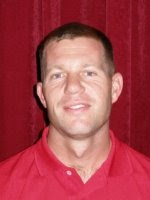
On July 8th and July 16th I was assigned to work on PDL games in El Paso between the Chivas-Patriots and the Dallas-Ft Worth Tornadoes and the Chivas-Patroits vs the West TX Utd Sockers. The PDL is considered the bottom division of the professional ranks of US Soccer, and is a developmental league for MLS scouts to find players. Although most of these players are not paid, the atmosphere of the games is of a professional caliber. The expectations of the referees are also to perform at a professional level.
In the games that we did, we arrived two hours before kickoff to inspect the field and meet with the referee liason. In the pregame conference with the referee, much of the topics covered were reviewing the USSF Directives, and discussing how to handle key players. In our warm up for the game, we did an organized warm up together for 20 minutes. At both games, the center referee had requested that we all wear matching black shirts to show teamwork.
During the games, I did notice a high level of play and that our our discussion over the Directives was very important, as these games had many incidents that related to them. I had to draw on my knowledge of AR involvement, injury management, and mass confrontation.
In both games we were assessed. The assessors at this level do not miss anything. Everything that happens in the games are open for discussion afterwards. Each correct or incorrect decision is dissected and brought up and talked about.
Overall the experience of doing these games was very rewarding and I hope for more opportunities to do games at that level.
Orion Stradford
Subscribe to:
Posts (Atom)